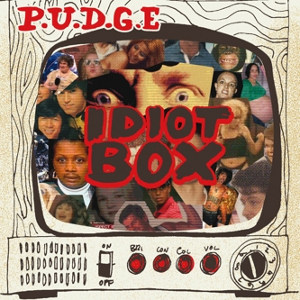
Available on: Ramp LP
The Ramp Recordings label has been mostly concerned with pushing artists from the UK’s bass-heavy dance scene in the past year or two, but its roots lie in the expansive world of weird, insular hip-hop. LA’s P.U.D.G.E gives the label a rare album release, and it’s yet another album of swelling, crunchy hip-hop from the city of angels’ busy, overcrowded production scene.
There’s something different about P.U.D.G.E; this isn’t your average Dilla rip-off album. It doesn’t hurt that the album’s opener is not only stupid but foolishly brave, essentially layering a simple staggered drum beat over the intro of Prince’s ‘Let’s Go Crazy’ – it’s hard not to crack a smile in admiration at its sheer audacity. ‘Elektric Werdz’ is insidious in its simplicity, splitting the track apart with its powdery drums and squeaky trills until your head nods along with the fractured beat.
What separates P.U.D.G.E from his contemporaries is that he keeps his samples in big, discrete chunks and chops and dices them right in front of you, allowing the listener to witness the process rather than just the finished product. It’s akin to juggling with boulders, though P.U.D.G.E has such a careful control of his samples that his use of these obvious pieces often ends up overwhelming (notably on the dramatic soul of ‘Everything 2 Me’) rather than amateurish.
Not merely taking samples and snippets and fashioning beats out of them, P.U.D.G.E. prefers to add his own beats in the form of corroded, acid-singed drums, drums that barely carry any physical power outside of their own rhythmic pull. Everything on Idiot Box sounds damaged and askew, and the effect is hypnotic as the album speeds through its short, sub-half-hour duration. Long-winded speech samples murmur under the entire thing (phone messages, police warnings, news reports, everything), lending the music a paranoid energy as well as nicely bridging the tracks together: the beats flow in and out like some malfunctioning radio.
In thirty minutes, P.U.D.G.E has managed make something far more substantive than that running time implies; the fact that he did it in a style so prone to over-fragmentation and scatterbrained diversion tactics is a different matter entirely. The mood of the album is restless, but the constant speech running in the sewers below endow it with a vibrancy rather than a fidget; if we want to get really philosophical about this music, maybe it’s a metaphor for the anonymous bustle of L.A. What’s most important though: just listen to the way the stilted smooth jazz of ‘The Price Is Wrong’ (you know what this samples) floats into the melodramatic prog of ‘Wholehearted’ only to descend into the druggy jazz cool of ‘Lost Angel’. There’s no mood or aesthetic that P.U.D.G.E can’t lovingly poke holes into, and while that might sound violent, it’s all the better to let his inspiring vision shine through.
Andrew Ryce
More from Residency



![Ryoji Ikeda installation data-cosm [n°1] extended at 180 Studios until 1 February, 2026](https://factmag-images.s3.amazonaws.com/wp-content/uploads/2025/12/data-cosm-ALubbock_180-14Oct-3554-250x155.webp)
![180 Studios presents new Ryoji Ikeda installation, data-cosm [n°1]](https://factmag-images.s3.amazonaws.com/wp-content/uploads/2025/10/ryoji-ikeda-data-cosm-1-250x155.webp)