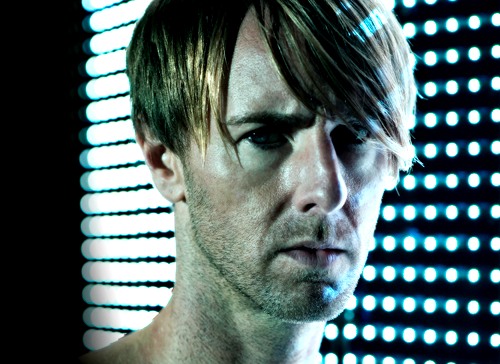
Love him or hate him, in the world of electronic music it’s hard to ignore Richie Hawtin.
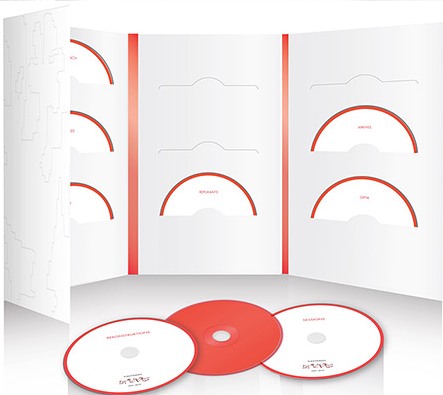
The Canadian techno maven took time out from his holiday in the Philippines to talk to FACT’s Justin Toland about his latest project, Arkives, a massively comprehensive reissue of pretty much everything he has ever recorded as Plastikman (all the original albums, remixes, rarities and unreleased tracks). Always one to try out new ideas, Hawtin will only be making as many copies of the Reference (11 CD/DVD/book) and Collection (CD, vinyl and all the trimmings) editions of Arkives available as are pre-ordered.
In this in-depth interview he explains why, why now, and also goes into detail about Plastikman’s music from Sheet One to the present, reveals his regrets over a missed opportunity to make “tribal-bongo-disco-house” and discusses plans for new Plastikman recordings and a Plastikman movie.
You released the Plastikman Kompilation in September. I guess a lot of people when they are going through the back catalogue stop at a compilation album; what made you want to follow that up by releasing the complete Plastikman Arkives at this time?
“Kompilation was kind of a bridge release, we actually kind of quietly released it in the summer, and it was really specifically for the new fans coming to the Plastikman live show who may want to take something home with them and get a little more into the project. Whereas Arkives is really the full spectrum of Plastikman, it’s the most comprehensive thing we’ve ever done. I’m definitely hoping that this is something that new fans find exciting and of course it’s definitely there for the people who’ve known and maybe grown up with Plastikman.”
“I just don’t feel that in 2010 we really need to continue making mass products and throwing them out into the marketplace in the hope that they sell, and if they don’t, not really worrying about it and leaving it to the stores to discount or destroy or give away.”
One of the interesting features about the release is the fact that you will be producing only as many copies of the Reference (CD) and Collection (CD, vinyl and all the trimmings) editions as have been pre-ordered. How do you feel about seeing record and CD manufacturing reverting from mass production to a craft process? Do you mourn the passing of the age of vinyl as it becomes something quaint and collectible, rather than something everyone has to have?
“In a way our scene, electronic music, was always pretty collectible, it’s not like we are selling hundreds and thousands of records over the years. You still find the records that we were mass producing in the 90s in clear sleeves, being put away, looked after and stored. But for the actual industry it is a harder time than it’s ever been, and I just don’t feel that in 2010 we really need to continue making mass products and throwing them out into the marketplace in the hope that they sell, and if they don’t, not really worrying about it and leaving it to the stores to discount or destroy or give away. Or even worse, just to collect dust or be thrown in a garbage can.
“On a conscious, ecological level it makes sense to produce those just to the orders that we get. On an economical level for a small label, it makes sense, because to produce each one of these items it’s nearly 50 euros in just manufacturing costs, so if you times that by hundreds or a thousand that becomes quite a big burden on a small record label.
“In a way our scene, electronic music, was always pretty collectible, it’s not like we’re selling hundreds and thousands of records over the years.”
“And at the end of the day I believe, okay, I’m relatively well known in the electronic music circle, but that’s a small community, and I want this package to be as special and unique to the people buying it as it is to me who’s putting it together. And not just me, my whole team, we’ve gone back to the archives, we’ve spent the last year talking to old friends, finding old photos, remembering and reminding ourselves about old stories and collecting this. It really is something unique and special and I really hope that that comes down the chain to when people receive it in their hands. Also partly just to have something that you have to come to us directly to get.
“There will be a limited supply; we’re going to send some out to some record shops, but the people who come and order it from our site, each of the books is personalised, the first page actually says ‘presented to (your name)’. It’s there, it’s for you. I hope it’s something that people hold close to their heart, and it’s one of those items that every time you go through your house and you move or you do a spring cleaning that this is one of the items that you put to the side and say, ‘I’m gonna keep this, this stays with me’.”
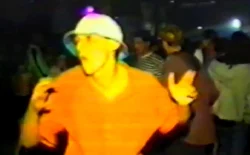
Plastikman – ‘Spastik’
In a previous interview with FACT you referred to the live arena as being more exciting than the studio. And in another recent interview you referred to the release of Arkives as a way to build support for a Plastikman tour, especially in North America. This is interesting because, back in the 90s, listening to Plastikman often seemed to me more of a bedroom than a club experience. If we go back to the era of Sheet One, Recycled Plastik and Musik, to what extent was live performance or playback in a club the driving force behind your creative process?
“I don’t think it was ever the main driving force, but because I’ve always had the luxury of performing as a DJ and being in clubs and also doing limited live shows here and there I think the dancefoor and that performance arena or performance club situation always somehow influenced what I was recording in the studio. I think you’re totally right, Sheet One, Musik, nearly all the Plastikman albums, they’re not really full-on club experiences, okay you’ve got your ‘Krakpot’ and your ‘Spastik’ and things like that, but the albums were created to listen to in one session as an immersive experience.
“But as I say that, you know tracks like ‘Plasticene’, or especially ‘Plastique’ or ‘Kriket’, these were tracks that were inspired by the dancefloor, but the dancefloor in Detroit in the very early hours of the morning when things slowed down and got a little bit strange and people were a bit freer in their movements and perhaps were dancing as much mentally with their mind as they were physically with their feet. Plastikman kind of slips and slides between those boundaries and that’s perhaps part of what makes it unique and special.”
“Plastikman – the whole project – is pretty reactionary.”
It’s been reported how you moved away from the hard techno rave sound of Plus 8 after you’d been to a rave, I think in Holland, and you heard all this anti-Semitic chanting and people dancing at 150 bpm to your stuff and it put you off. Did the whole Plastikman aesthetic come out of a reaction to that, the full-on rave sound?
“Plastikman – the whole project – is pretty reactionary. Usually when I have something that I think isn’t happening or needs to be said I come back into the project. Sheet One was definitely like you said a reaction against how techno was becoming harder and more aggressive and it seemed to be slipping out of our hands as to what we thought it was. You know the 303 was a machine that I loved: I loved the 303 lines, I liked the acid sound, I loved how it was trippy and organic and liquidy, and around ’92/’93 it started to get really, really, really aggressive. I thought there was something missing in that sound and I felt that I needed to come back and kind of slow down and trip out the 303.
“Sheet One was also a reaction against the compilations of the time, and people not really taking, in my opinion, albums seriously. Albums to me, growing up on Kraftwerk and Tangerine Dream and even New Order records and things like that, they were cohesive ideas where things kind of blended into each other. Once you put the first track on there wasn’t really a gap between tracks two and three and four, so you were forced to go from track one to the end. And that wasn’t happening really in ’93, so for all those kind of reasons Sheet One was born.”
;hl=en_US” />Loading Video…
;hl=en_US” allowscriptaccess=”always” allowfullscreen=”true”>Plastikman – ‘Disconnected’
If we move forward a few years now, there was the initial period of Plastikman and then there was a bit of a gap and then you returned with Consumed. That was quite a departure from earlier Plastikman releases, was that a conscious reaction to the problems you had had recording Klinik? How do you view Consumed and that era now?
Yeah, it was definitely a reaction to the problems I had trying to record the third album. I was trying to build upon Sheet One and Musik and I felt kind of pigeonholed into coming up with Sheet Two for lack of a better title and I was also getting into this very stripped down sound that I’d kind of found with the Concept 1 releases.
“I had been thrown out of America and had kind of become detached from the whole Detroit scene that was instrumental in inspiring Sheet One and Musik. All these factors were at play and the one thing that I knew, after I kind of cobbled together the Artifakts record and had Consumed finished also, I knew that whatever I put out would have a huge amount of hype and people were going to go out and buy it and listen to it, so I thought the best thing at that moment for me was to use that momentum, that situation, that position I was in, to deliver something as different as possible, to kind of hopefully use the notoriety or the popularity of Plastikman to perhaps get people into something that they weren’t expecting and that was, you know, part of consuming. And also to break with the tradition of what those first two albums were.
“Of course Consumed is based upon all the same components as Sheet One and Musik – the acid lines are there but they are muted and everything has kind of been detached, like I felt. So I knew it was a direction that I wanted to go in, and it just felt like the right moment to come with that album with no compromises.”
“I thought the best thing at that moment for me was to use that momentum, that situation, that position I was in, to deliver something as different as possible, to use the notoriety or the popularity of Plastikman to perhaps get people into something that they weren’t expecting.”
It would be another five years before you released Closer. Why was there such a long gap?
“After what we have just talked about, being thrown out, working on Concept 1, working on trying to find the direction of Plastikman, once it was all done, I found myself in 1998, having spent a couple of years in, more to the arts side, the more minimal side, the experimental side with those records – they definitely weren’t coming from a dance-focused Richie Hawtin at that time, and that was because it was a reaction against the dance-focused Richie Hawtin of the early 90s.
“So after that, and this is what usually happens after a big Plastikman project, I really wanted to take a step away and get back into DJing and travelling. And one of the first things I did right after Consumed was to end, or at least put Plus 8 on hiatus, work on the first M-nus track, which was ‘Minus Orange’, which was sample-based. It was clubby, it was based upon Yello, it was something completely different, I had never worked with samples, it was another challenge to myself. And that kind of took off, M-nus took off and that became my focus.
“All that [M-nus] started to happen, weeks became months, months became years, and suddenly it was four or five years later and I found myself in a different situation, which pushed me to return to the Plastikman sound.”
;hl=en_US” />Loading Video…
;hl=en_US” allowscriptaccess=”always” allowfullscreen=”true”>Plastikman – ‘I Don’t Know’
When you were listening back to the old recordings as you were compiling Arkives what surprised you the most?
“It surprised me how many forgotten tracks there were, little bits and pieces and experiments that were happening around the Consumed time. And some really interesting bridges between Consumed and Closer. I didn’t record that much in that gap, I was really busy off DJing, but the little that was recorded really had connectivity between the concept albums and Closer and you kind of hear them slowly melting into what became Closer. Some of those tracks are on Arkives and they kind of bridge that gap. And also listening to things like ‘Slinky’, and some of the things that were done in ’95/’96 and didn’t even make it onto Klinik, hearing these other reactions. ‘Slinky’, which we’ve just released now is totally pure, classic Plastikman. At the time I didn’t I didn’t want to release it because it was too prototypical Plastikman, which is exactly what I love about it now and why I decided to release it now.
“M-nus became my focus…weeks became months, months became years, and suddenly it was four or five years later and I found myself in a different situation.”
“I guess at some point I didn’t take the obvious or the easiest route, I wasn’t really comfortable with the success of Plastikman after Sheet One and Musik. Like I said there seemed to be a push to get the next album as soon as possible, work on live shows, get on the touring thing with Plastikman, and Plastikman is so connected to Detroit and the parties and my friends there that it was hard to take that experience and translate it to the rest of the world. I had trouble with that and looking back I brought myself back to that and remembered why some of these things I really liked then and I still like now didn’t see the light of day until now on Arkives.”
;hl=en_US” />Loading Video…
;hl=en_US” allowscriptaccess=”always” allowfullscreen=”true”>
Plastikman – ‘Consumed’
Is there anything in the Plastikman back catalogue that disappoints you now, or which you think should have been done better or could have been done better?
“That’s hard to say. One track that always bothered me is a track that was out on Musik, one of my favourite tracks ever: ‘Marbles’. It has such an intensity and feeling and aggression, which I loved. And part of that is because of the one pass mix I did on it. I always wish I could have got back to that and cleaned it up a bit so it had a bit more power in a club system. In the same way, some of the tracks at the time, they were four-to-the-floor, but I remember mixing them, they weren’t supposed to be pounding to the head, they were supposed to be danceable, they were supposed to be nearly danceable to someone who was lying down or sitting there listening to them.
“I was doing some experiments with a track called ‘Afrika’, which was like very heavily percussive. I found quite a lot of tribally kind of things in between ’95 and ’96 because I was quite into this tribal-bongo-disco-house at that moment. I was trying to experiment with how that went with Plastikman; I think that could have been experimented more. And I also liked some of the things I was doing with Bomb the Bass and some of the remixes with Attica Blues and especially La Funk Mob. I could have spent more time going down that pathway on my own sound and it could have developed into something else interesting.”
“My focus is to create new material, but my focus is not to create new material for an album per se. I’m very much focused on where the live show and this difficult experience that we’re working on right now, where that could go in the future.”
The career trajectory of the Plastikman name has tended to consist of relatively short periods of intense release activity (1993/94, 1998, 2003) interspersed with long periods of silence. As we are now in one of the periods of intense release activity, could you perhaps say something about the new Plastikman recordings you have been working on and when a new album might be ready?
“I can honestly say I’m not working on anything yet. I’m doing a lot of doodling and playing around and checking out pieces of equipment and software. And of course just working on the whole Plastikman live show this whole year, as well as going through Arkives kind of just pushed me fully back into the whole Plastikman idea and sound.
“You asked at the beginning was the live show a kind of test bed or did that inspire things in the early days? I think it’s inspiring things much more now. Because the live show, the equipment, what I’m doing, what’s built inside the cage that you can’t really see is really like the new version of my studio from 1993: a new analogue/digital hybrid. And as I’m doing the shows, doing the rehearsals, it’s becoming kind of a test bed – not even a test bed of ideas – it’s becoming where things get created.
“It’s my plan next year between shows to take the live set-up and augment it with one or two other pieces and just flesh out the system, flesh out the live show, by creating new content for the show and I imagine that could become a new album or something like that. My focus is to create new material, but my focus is not to create new material for an album per se. I’m very much focused on where the live show and this difficult experience that we’re working on right now, where that could go in the future.”
“When I was writing Closer words and vocals and lyrics just started to happen. I remember the day it turned on and I remember the day it turned off.”
On Closer you starting featuring vocals with Plastikman for the first time. Do you see that continuing with any new tracks you generate?
“At the moment I don’t want to say either way. I don’t really have any plans. When I was writing Closer words and vocals and lyrics just started to happen. I remember the day it turned on and I remember the day it turned off. About a year and a half ago that clicked on again for a couple of days and clicked off. We’ll see: once I get into the studio that may happen, I can’t tell. This is why there’s gaps between these, as you say, intense periods of Plastikman activity. There’s a lot of time when I don’t feel so connected to the project and I have other things, aspirations and ideas that I am working on and when I do get sucked into it I go with it and I go with the feeling and the flow and where it takes me. Right now I’m definitely in there, but I could see some type of vocal start happening again.”
“The Plastikman project will always be connected to Detroit: the people, the city.”
You mentioned earlier that the genesis of Plastikman was very much a Detroit thing and connected to your experiences of being there. This is going to be the first Plastikman stuff that you’ve written since you moved to Berlin. In your mind are you still rooting the project in Detroit or are you going to try and come up with something that sounds like Berlin?
“Well, as soon as I’ve finished New Year’s Eve I’m actually going back to my studio in Windsor (Ontario) to start recording. You know I feel somehow the Plastikman project will always be connected to Detroit: the people, the city. I don’t know if that means I have to go back to record. But at the moment I feel I need to go back there to have a certain distance from everything that I’ve experienced the last couple of years in Berlin and around the world. To try and distill that into some kind of new project. It’s very much like when I was recording the Plastikman projects, they’ve all been recorded in Windsor, but they would always be about me in my studio in Windsor peering back into Detroit, into those experiences that I had there.
“Perhaps being back home in Windsor will reconnect me to Detroit or perhaps it will let me connect to all the different things that Berlin has offered me over the last couple of years – I’m not quite sure yet.”
One more question: what else have you got coming up in 2011?
“At the moment we have a Plastikman tour, a five-date tour, in March in Australia. That will kind of be the continuation or the end of what we’ve done this year. After that I plan on jumping back fully into the DJ thing, whatever that is, for a couple of months and announcing some new DJ technology ideas. I would like to try and get back into the DE9 project, which has kind of been on the shelf for a couple of years. There’s a conflict that I’ve been trying to work on and I think maybe I can [solve] it – we’ll see. If I can do that maybe next year is the time.
|Into September/October/November, the plan right now is to bring Plastikman back on tour with a slightly updated show. We’ve just been filming all the shows and there’s an idea of a Plastikman film. That’s the first time I’ve mentioned it and it won’t be a typical live concert film if we do it. So it should be a busy year.”
When you say it won’t be a typical live concert film, what will it be? Acting?
“No, I don’t think I’ll be acting. [laughs] But there might be actors.”
Justin Toland
Plastikman homepage
More from Residency


![Ryoji Ikeda installation data-cosm [n°1] extended at 180 Studios until 1 February, 2026](https://factmag-images.s3.amazonaws.com/wp-content/uploads/2025/12/data-cosm-ALubbock_180-14Oct-3554-250x155.webp)
![180 Studios presents new Ryoji Ikeda installation, data-cosm [n°1]](https://factmag-images.s3.amazonaws.com/wp-content/uploads/2025/10/ryoji-ikeda-data-cosm-1-250x155.webp)