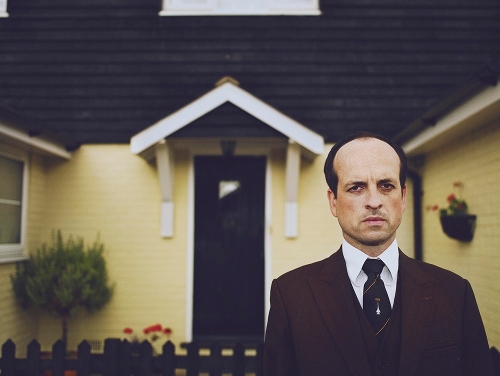
Matthew Herbert is at it again.
Less than a year after the release of his One Pig album, he’s back with a new album, this time in the Wishmountain guise he last used in ’98. Tesco is a dance music album, but an unorthodox one: its 10 tracks correspond to the bestselling items for the titular British supermarket chain, with eight sounds from each item recorded and massaged into the kind of supple, minimalist house rhythms that first brought Herbert to the world’s attention over 15 years ago. It’s Herbert at his mischievous, alchemical best, inducing you to groove to a bottle of Lucozade or a packet of Andrex toilet roll.
Last week FACT TV met the eternally restless producer in East London to talk about the rebirth of Wishmountain, the genesis of Tesco (out now on Accidental) and the “aftershocks” of the One Pig project. You can watch the video here; what follows is the full transcript of the conversation.
“We’ve got four and a half litres of the pig’s blood still, in the fridge…and it’s gone off.”
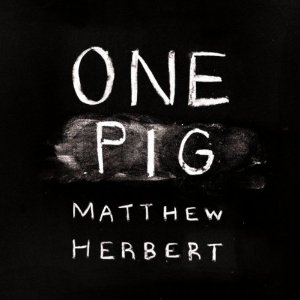 The One Pig project was clearly the most time-consuming and absorbing project of your career. Have you completely washed your hands of it now, so to speak?
“Its still part of my diary, if you like, just because we’re out touring Europe with it, doing live shows still. And there are some interesting aftershocks, for me, anyway – one of them, and it’s really small, I don’t think it would concern anybody else, but we’ve got like four and a half litres of its blood still, in the fridge…and it’s gone off. We daren’t open the top.
“We’ve also got some bacon left over from the pig – the idea was, that if it wasn’t too dark, that we’d sell bacon as part of the record, so that if you were bold enough you could eat it while listening to it – making it an all-consuming experience. So every time I see the blood I think, I really should do something with that, but I think it’s quite telling that I just can’t tip it down the sink, which is where it would’ve ended up. So I’m faced with the kind of dilemmas that as a society we’re faced with daily – what to do with our waste, what to do with the mess that we’ve created. Those little things keep it alive in my mind.
“It was a very challenging project. But probably one of the most complete that I’ve ever done – just because it’s so easy to explain. It’s a pig. Everyone knows what that is, from my two-year-old son to his grandmother. People are actually able to talk about some of the ideas, or their reaction to the music, or the context, or the controversy or whatever it is, rather than me having to spend an hour explaining it to them and trying to draw them in.”
“Music is so varnished now…it seems to exist in this otherworldly bubble that rarely touches you and is rarely about life and death.”
You mention controversy. How did you feel about some of the more extreme reactions One Pig was met with?
“The most exciting part for me was when it all started to kick off…at that stage I hadn’t actually written any music. The story came out that I wasn’t allowed to record the killing of the pig by the abattoir, and the Guardian ran a small piece about it, just picked up from the blog I was doing about it, and then suddenly I had calls from the Sunday Times news desk and calls from all around the world picking up on this. Then of course that turned into PETA condemning the record before they’d even heard it, and condemning the process, and condemning me, and everything about it. There was a Facebook group complaining about it.
“What was exciting to me was that people were upset about a piece of music – and for me that feels exciting, to think that music still has that potential to generate friction. I think music is so varnished now, it’s so behind a kind of plasticised framework, there’s a sort of film that goes around it, it just seems to exist in this otherworldly bubble that rarely touches you and is rarely about life and death.”
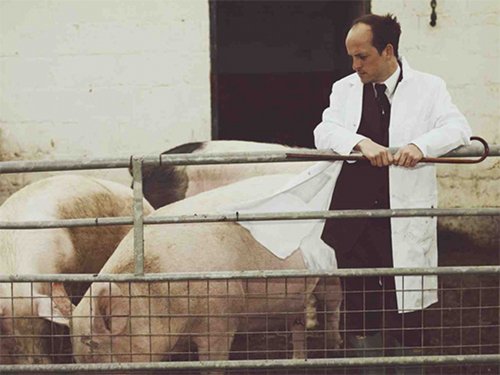
And this excitement fed back into the project?
“I was upset to begin with but then I was excited, it was like wow, people are frightened, or challenged, by a piece of music, and a piece of music that didn’t even exist yet. Regardless of whether the music was any good or what I ended up doing with it, that felt like a new thing for me. I mean, I’m always trying to prod things with my music, I’m always trying to make things a little difficult for myself and possibly others, and this was he first time where this had really expressed itself in quite a profound and sometimes emotional way. What was weird was just how automatic people’s assumptions are – PETA even said in their statement that I was making ‘entertainment’, and that idea that music is ‘just entertainment’ is really indicative of where we’ve got to, thinking of music as just that, just entertainment, just letting your hair down or getting away from something, or doing something other than the thing that you do in your normal life. So I really enjoyed that part of the process: thinking about that friction, living with that friction. And this was probably when it clicked, what I was trying to do.
“Virtually all the reviews that I had of the live show and the record, regardless of whether they like the music, were reflecting on the process, and that was all I could really hope for. For people to think seriously about some of questions I had to deal with, the morality of it – is it right? What’s the end result going to be? Is this music acceptable?”
“Music’s no longer just impressionism, it’s now also documentary.”
How did you go from completing One Pig to reactivating Wishmountain, ostensibly a dance music project?
“The pig was a project that took up three years of my life and is still going, and it was a very elaborate process of putting it together. You think, right, let’s go and record a pig being born, and then you find out you have to wait – I had to wait 10 months before the pig was even born. And I loved the idea that in this age of the laptop, where we’re so connected – you know, I’ve got a phone and an iPad with me and I could write five pieces of music by the time I get home tonight on the train – that there I was having to negotiate with a farmer to actually get access to do my recording. There were constant hurdles along the way, which I appreciated, even though they were frustrating at time – because they forced me to take my time, and not be so sort of power-mad.
 “Then you do all the live shows and interviews and things, and you pause, and you think, what next? I’d just done life and death, and for me I’m still interested in those big questions. There’s a sense that what music is expressing is an otherness; historically that’s been about spirituality, it’s been about the earth, it’s been about community, it’s been about individual notional questions, but it always seems to be about an otherness of some kind… there aren’t many songs about just going to the library and taking out a book, or just sitting down. And particularly if you look at the classical tradition – if you look at Mahler, or Beethoven, or Shostakovich or Stravinsky or Debussy, there’s a real sense of spiritual life; they’ve spent years thinking about these big questions about what happens when we die, what the meaning of life is. We’ve got completely different tools now – I can go and record death, I can go and record a Syrian revolution, people being murdered, and turn that into a piece of music; so that’s a fundamental shift, music’s no longer just impressionism, it’s now also documentary.
“And so part of me wants to carry on pursuing those themes about life and death – if I’ve got a pig being killed, or someone being shot and I’m playing it on my keyboard – BANG – what responsibilities do I have to that original sound, what’s the morality of that, what’s the philosophy of that, what am I hoping to achieve by using it and again, is it right? What responsibility do I have to the audience and to the person who might have been shot and killed? For me those are really important questions that take a long time to answer. All of that stuff is really important to me. But having said all that, there’s also me wanting to take a night off from all those questions and wanting to make dance music – but at the same time not wishing to completely abandon those principles or those concerns.”

What, for you, is Wismountain “about”? What distinguishes it from your other projects or aliases?
“Wishmountain was pretty much the first time I’d expressed my real musical voice I guess, which is when I first bought a sampler I sampled an apple-crunch, and to me that felt new and exciting and different and challenging. That was in 1988…I was 16. I had a Casio (FZ1? sampler and it just had eight outputs, so I thought, I’m going to take eight sounds out of this object and send each sound out through one of those eight objects and write some music out of those eight noises. And it was like a magic trick, it was trying to get people to dance to the sound of a pepper-pot…or a VHS cassette player without plugging it in or a radio without turning it on.
“I was pretty fed up with 909 or 808 drum machines, I’d been hearing them for years.”
“It was about animating inanimate objects, but doing so in a seductive way, in order to make people dance, and also to reimagine dance music in a way, because at that point I was pretty fed up with 909 or 808 drum machines, I’d been hearing them for years – by 1990 you’d heard thousands of records made with a 808 or 909, and as a side note, I can’t believe we’re here 22 years later STILL LISTENING TO THOSE SAME BLOODY NOISES, amazing noises though they are. It just solidified, like the guitar has in rock music, it’s just solidified into a fixed texture that’s used in dance music. So for me it was about animating inanimate objects and providing a different a palette of textures and sounds.”
 How did the idea for Tesco come about?
“I was like OK I’ve got a week spare, let’s make a record, so I thought about making dance music. Wishmountain, which I thought I’d retired. I’d wanted to do something about supermarkets for a while now, because they’re such a part of our everyday life and yet they’re inscrutable in many ways – we have very little genuine interaction with them, other than simply to buy the things in them or not. That’s the extent of our interaction with them – you don’t got there to express yourself, you don’t go there in groups. It’s a very clear transaction, and to me it carries with all the stories of our time, the good and the bad. When you think about the battles around resources, climate change, and so on. The food that we eat has a massive impact on those stories that we read about in the paper. But I didn’t want to get into a big supermarket piece so…
“We could call our piece of music, I don’t know, ‘I Hate The Fucking Olympics’ but we don’t, we call it ‘Pyramid X’, this incredibly abstract nothingness.”
“I just really liked the idea of calling the record Tesco. We have so much power, and we so rarely use it: as musicians, we could call our piece of music, I don’t know, ‘I Hate The Fucking Olympics’ or ‘I Hate The Fact That Dow Jones Is Sponsoring The Olympics’, but we don’t, we call it ‘Pyramid X’, this incredibly abstract nothingness. So I like the idea that I’ve got this power, and it’s all about trying to use it in fun, creative, engaging ways. So the word ‘Tesco’ now means something different to me, and potentially to a few people who might buy this record.”
“I thought, let’s take the top 10 bestselling items in Tesco and make a record out of them, and that’s what I did – I did it in four days from start to finish. All the sort of politics and all my earnest head-scratching and planning and thinking about it, that’s all in there, but it’s designed first and foremost to be a reanimation of a product in a different context. I like the fact that Andrex doesn’t really sound like toilet roll anymore…that’s not what I intended, but that’s what it’s come out as. And having those restrictions as well – just eight noises. Also I’ve been doing [other things] for 20 years now, so it felt like re-forming – like all these bands that get together from the past. I’ve re-formed myself for a record!”

From what you’ve just said, and with reissues of some of your key albums from the past on the way, it seems like you’re beginning to reflect more upon your early work. In doing so, I wondered, what common themes emerge for you? How does the young Matthew Herbert differ from the Matthew Herbert of today?
“I think the biggest, most obvious shift that’s happened in my work over the years is that basically it was very tidy, very ordered, very sparse and absolutely precise when I first started and now it’s very messy, My music’s very messy. I think that reflects my experiences – I set out making records as most people do I presume, with naivety and enthusiasm and thinking that you’re expressing meaningful about yourself. But I guess an accumulation of experiences makes you realise that the world is in fact messy and difficult…Life is never quiet, it’s never ordered and you can never control it. There’s a certainty and sure-footedness that I had at the start and gradually it’s got murkier and messier and more complicated. I’m still very clear about the gestures that I want to make, but I just don’t think it’s maybe as black and white as I thought when I started.
“Life is never quiet, it’s never ordered and you can never control it.”
“When I started out, a lot of what I did was a reaction to the music that was around me at the time, whereas now I hardly listen to music at home. I obviously listen to a huge amount because I still DJ still, and a lot of music comes through the studio, but I don’t listen to a huge amount of music in the way that I used to. So my reference points are now much more things that are going on in the newspaper, or in literature, or in a story that someone might tell you about something that’s really important or meaningful to them. I often get asked about the political nature of my work and it’s like, well, I’ve made over 25 albums now – am i just supposed to talk about my girlfriend?”
Kiran Sande











![Ryoji Ikeda’s data-cosm [n°1] installation returns to 180 Studios](https://www.factmag.com/wp-content/uploads/2025/12/ryoji-ikeda-data-cosm-1-250x155.webp)


![Ryoji Ikeda installation data-cosm [n°1] extended at 180 Studios until 1 February, 2026](https://www.factmag.com/wp-content/uploads/2025/12/data-cosm-ALubbock_180-14Oct-3554-250x155.webp)
![180 Studios presents new Ryoji Ikeda installation, data-cosm [n°1]](https://www.factmag.com/wp-content/uploads/2025/10/ryoji-ikeda-data-cosm-1-250x155.webp)