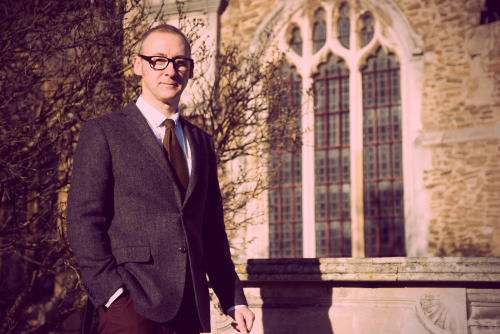
Belbury Poly returns on February 24 with a new album, The Belbury Tales.
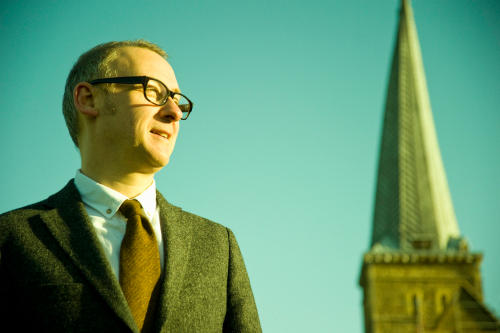
The solo project of Ghost Box co-founder Jim Jupp, the ‘Poly has been responsible for some of the finest releases in the label’s catalogue, most notably 2004′s The Willows (which was named among FACT’s 100 best albums of the 2000s). The Belbury Tales is his fourth album to date, and the follow-up to 2009′s From An Ancient Star.
Though its mood and aesthetic is very much in keeping with previous Belbury offerings, sonically speaking The Belbury Tales has a more live, organic feel than we’ve come to expect – the result not just of substantial contributions from Jim Musgrave (drums) and Christopher Budd (bass, electric guitar), but of Jupp himself playing guitar, zithers, melodic and ocarina as well as his usual analogue synths and keyboards. Voices too – presumably sampled – are deployed to suitably bewitching effect on ‘Green Grass Grows’, ‘My Hands’ and especially ‘The Geography’.
The library music of Basil Kirchin is an obvious reference point, as perhaps is the electronically-enhanced British jazz of Neil Ardley, and some of the more whimsical, folk-influenced prog records to have emerged from the mists Albion in days of old – The Belbury Tales is the kind of record you feel should have come out on Vertigo around ’73, but never actually did.
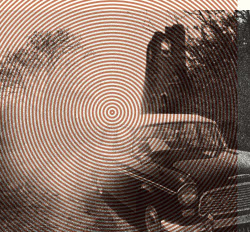
The cover art and design is, as with all Ghost Box releases, by Julian House, beautifully evoking the cover of a wyrd fiction paperback from the 1970s. Also included in the booklet is ‘The Journeyman’s Tale’, a piece of short fiction by Rob Young, whose 2010 non-fiction book Electric Eden convincingly positioned Ghost Box and its artists as part of Britain’s visionary folk continuum, and a short quote from the late Trish Keenan of Broadcast: “It seems to me that the past is always happening now. In the present we are always memory.”
We’ve not had long to digest The Belbury Tales, but it’s already safe to say that in terms of both music and concept it’s one of the most rewarding and fully realised projects in the Ghost Box catalogue – and that’s high praise indeed.
FACT’s Tim Purdom caught up with Jupp to find out more about the making of this remarkable record, and to hear how he’s at pains to avoid venturing into what he calls “Clarkson/Wakeman territory”. Jim has also recorded an exclusive mix for FACT, which you can stream via the Mixcloud player above.
 It’s a couple of years since we last visited Belbury. What’s been happening in the village?
“Well, I like to think that time doesn’t flow in the same way in Belbury as elsewhere – so nothing has changed, but it’s all happening now. Its’ a question of where we focus our attention with each Ghost Box release. But it’s being noticed that Belbury Poly sometimes has extra members and an occasional electric sound.”
1970s British prog is a palpable influence on The Belbury Tales. Can you tell me a little bit more about your relationship to this oft-maligned music?
“I’m a fan of a particular strain of English prog, and particularly all the stuff that grew out of the Canterbury scene. I love Caravan, certainly one of the poppiest and accessible of great British prog rock acts. Caravan manage to typify the intricate long form music of prog but with a joyful lightness of touch – which I think overlaps with the light music and soundtrack music that’s always influenced my work as Belbury Poly.
“It’s not a prog rock album, I don’t think.”
“At a more technical level I’m a great admirer of the production sounds and musicianship in Caravan, Hatfield and The North, Egg, Soft Machine and so on. And Mike Ratledge and Dave Sinclair are keyboard heroes of mine.”
But you’ve not quite made a prog album. Or have you?
“No. While the sound and feel of British prog is an influence on The Belbury Tales, it’s only one element. It’s not a prog rock album, I don’t think; it has just as much to do with TV soundtracks, library music, kosmische and psychedelic rock.”
You really home in on a folkloric, neo-medievalist sound on this album. I feel like I’ve heard 70s records from Britain that captured that essence or channelled such things in a prog context, but I struggle to think what. Are there any particular records from that era which project this darkly arcadian, mythology-steeped vibe?
“I definitely recognise this essence in a lot of 70s music, and with this album hopefully I’ve explored just that without referencing a particular group or scene or album or genre – but I have freely grabbed sounds, musical elements and production styles from a range of sources that I feel feed into this kind of folky, electronic, rocky, jazzy, hairy sounding current of a lot of early to mid-seventies albums. Along the way I reference Anatolian Psych Rock, TV themes like How and Hammer House of Horror, Dave Sinclair’s trademark fuzz organ sound, educational and poetry albums, the cod-medieval musical stylings that went with some of the later electric folk acts – perhaps all the overblown, and over-detailed stuff that had reached critical mass by 1977.”
“As odd as it sounds, this idea of the ploughman’s lunch was kicking round at the back of my head for most of the time.”
Who are the additional players and what are their roles in The Belbury Tales?
“Christopher Budd is an old friend of mine who cut his teeth as a bass player in live bands and now works as a composer and bass and guitar session player. He’s on a similar musical wavelength to me and is a lover of film soundtracks and psych rock; he co-wrote the track ‘Earthlights’ on the new album. I’m a selfish composer and not always comfortable collaborating – but I think Chris and I will probably continue to work on stuff together from time to time.
“Jim Musgrave came to my attention when he sent me some of his work as Land Equivalents – I immediately heard precisely the drum sounds and playing style that I was looking for on some of these new tracks and got in touch to arrange some remote sessions. Not the best way for any drummer to work, but Jim was able to work in his own studio and replace the programmed drum tracks on my early mixes. He’s very professional, musical and proficient, and has the technical know-how to record and work in this way.”
Your guests’ instrumental contributions really expand and enrich the Poly palette, but they don’t dominate or overwhelm it. Can you tell me more about the arranging and mixing process?
“The production and mixing process for this album took a long long time, and most of the tracks went through at least ten versions over the last two and half years. Partly because I was searching for the right sound for each but more likely because this was a huge technical leap forward for me – particularly working with the other chaps. Jon Brooks (of The Advisory Circle) is however my production mentor and technical advisor and I’ve learned an enormous amount from him along the way.
“In terms of composition I’m primarily a keyboard player, so it’s often these parts and sounds that lead – but I’ve always loved love a deeply unfashionable kind of maximalist, detailed ensemble sound with lots going on – so great care goes into arrangement and production so that different parts can be subtly foregrounded then merged back comfortably with everything else.
 “Having said all this, I don’t claim to have produced a particularly highly engineered hi-fi record; I still try to capture sounds of recordings I love on each track where appropriate and the result is often deliberately lo-fi. Production techniques vary greatly from track to track – for example, on ‘The Geography’ I sampled a snatch from an old National Trust public info film and tried to merge the beautifully saturated and muffled sounds with my own recorded additions, and a constant hiss of TV static adds to the feel of music heard on a 70s tube TV. Alternatively the track ‘Goat Foot’ is inspired by the sounds of Turkish psych – so a heavily compressed backline and tape distortion are the order of the day. Again, Jon Brooks was invaluable and during the mastering process he sticks firmly to warm analog processing, to enhance these effects. Hopefully this is one of those albums that sounds better on vinyl.
Rob Young contributes a piece of short fiction, ‘The Journeyman’s Tale’, to the liner notes. How did this come about?
“Well I approached Rob because he did us the great honour of including Ghost Box in his book, Electric Eden. And it struck me then, as at other times when he’s reviewed our releases, that he has exactly the right sense of what the label and all its artists are about.
“I’ve always loved love a deeply unfashionable kind of maximalist, detailed ensemble sound with lots going on.”
“As our albums come together I usually get into deep discussions with my label colleague and our designer, Julian House. I often feed copy, titles and mood boards of images and photos to Julian and he digests those and generates artwork ideas – it’s usually at this stage that overall themes start to emerge for us and we pin down the concepts that inform the record.
“When I asked Rob to do the note all I had was a weird list of words and ideas that included: ploughman’s lunches, the Canterbury scene, pubs, cod-medievalism, pilgrimages, modular synthesizers, churches and British science fiction. He got it and suggested a piece of fiction rather than traditional liner notes, giving us ‘The Journeyman’s Tale’. I don’t really understand how, but it captures the feel and intent of the album perfectly.”
Were there any particular items – musical, literary, visual – that especially impacted on the creation of The Belbury Tales?
“As odd as it sounds, this idea of the ploughman’s lunch was kicking round at the back of my head for most of the time. Not cool or rock-and-roll, and dangerously in Clarkson/Wakeman territory perhaps, but it occurred to me that it perfectly captures the very British relationship with the past: at once fascination, fantasy and reinvention. Reading round the subject, it’s not entirely clear to anyone whether in fact the ploughman’s lunch was a 60s invention, a rediscovery or a genuine tradition – its was certainly marketed and put together in its now familiar form in the 60s, but there seems to be more to it than that, as the quotes in the album’s sleevenotes suggest.
“I like the way that this overlaps with a sense of reinventing the past, false memories and fictional histories – the very thing that Ghost Box is all about. It also carries a whiff of British pubs and pub-rock and folk, possibly the breeding ground for much of the music that influenced the album.”
“There’s a sense of reinventing the past, false memories and fictional histories – the very thing that Ghost Box is all about.”
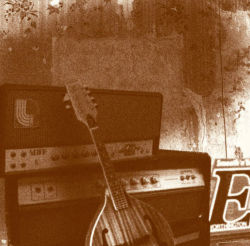 Belbury Poly hasn’t ever made the transition from studio to stage. Do you see that changing in time?
“I’d love to one day, but running the label and our own distribution network is a full time job, not to mention family responsibilities. It’s something I’d like to do properly with a full band of talented musicians – I wouldn’t be prepared to do a one man and his mixing desk sort of performance, I don’t think that would do justice to the music. So maybe when I have more time on my hands and the financial freedom for rehearsing and recruiting, yes.”
The revived Hammer have filmed The Woman In Black; Berberian Sound Studio is on the way… do you think there’s a bit of a resurgence of interest in the uncanny in TV, film and the culture at large?
“I know what you mean – there’s a lot of stuff around in music and film that directly nods to the world of Panther Horror anthologies, British ‘folk’ horror movies, and more generally nudey witch sort of stuff. All of which is marvellous – but for me that is only one small strand of the ‘culture’ that informs Belbury Poly and Ghost Box more generally. I hope that we’ve created a world which is as much to do with the weirdness of Britain in general, especially during our imagined all-at-once time frame of roughly 1958 to 1978. I often get asked about ghosts and the occult in interviews but the ghost in Ghost Box is more to do with faulty memory and TV screen after-images.”
“I’m keen not to lose touch with some of the more amateurish charm of the early stuff, when I had less idea of what I was doing or what it was about.”
The Belbury Tales feels like the most complete and satisfying Belbury Poly album to date. Where is there to go next? Do you find that the better you get at articulating and realising your vision, the more uncertain you become about your next move?
“I just get more terrified each time! But as soon as I start on a piece of work, themes, concepts, influences and the music just seem to emerge spontaneously. Still, I hope I’ve raised the bar a little each time – although in moving from an amateur to a professional over the last eight years I’m keen not to throw out the baby with the bathwater and lose touch with some of the more amateurish charm of the early stuff, when I had less idea of what I was doing or what it was about.”
Tim Purdom
More from News



![Ryoji Ikeda installation data-cosm [n°1] extended at 180 Studios until 1 February, 2026](https://factmag-images.s3.amazonaws.com/wp-content/uploads/2025/12/data-cosm-ALubbock_180-14Oct-3554-250x155.webp)
![180 Studios presents new Ryoji Ikeda installation, data-cosm [n°1]](https://factmag-images.s3.amazonaws.com/wp-content/uploads/2025/10/ryoji-ikeda-data-cosm-1-250x155.webp)